Changes for page NAUJIENOS
Summary
-
Page properties (1 modified, 0 added, 0 removed)
Details
- Page properties
-
- Content
-
... ... @@ -1,118 +1,46 @@ 1 += StockM update 2020.03.19 = 1 1 2 -= StockM update 2019.12.12. = 3 3 4 -** ~Maximumnumberof transportsinoptimization.**4 +**New menu icon / button “?”** 5 5 6 +StockM you can see the new menu icon / button ”?” 6 6 8 +Clicking on it opens a list with links: 7 7 8 -In the supplier‘s card near AutoOrder settings by describing transport (AutoOrder settings -> Fill transportation batch) you can show how many transports can be (the maximum number of transports). 10 +* User Manual; 11 +* Stockm News; 9 9 10 - The system willchoose onekindof transport,whileoptimizingan order,and will fill in only that kindoftransport tillthespecified maximum number.13 +Clicking on them takes you to the appropriate page. 11 11 12 -[[image: picture_.png]]15 +[[image:naujienos2.png]] 13 13 17 += StockM update 2020.02.06 = 14 14 15 15 16 - =StockMupdate2019.11.28.=20 +**Order formation several times a day.** 17 17 18 - **~**22 +The orders are formed by StockM system once a day. They are only formed if the data are renewed on that date before the order's formation. 19 19 20 - **~1.ClarificationofAuto send settingsin thesupplier‘s card.**24 +Since this update, there is an option to form orders according to the time set in the 'Suppliers schedule '(data before order formation must be renewed). You can see the "Time" column in the 'Suppliers schedule ' to indicate the order formation time. The time is chosen from a list that is specified in SM Admin. 21 21 22 - Selection ofAuto send settingswindowinthesupplier‘scardhaschanged:26 +**Important:** usage of this function is agreed separately and is set for a whole company. If needed, contact the project manager. 23 23 24 -((( 25 -* Optimization for auto send works only into the increasing side; 26 -* If you want to decrease the order – to optimize into decreasing side, this you can do only by specifying the parameters manually. 27 -* To decrease the number of rows to ... – also possible only by specifying the parameters manually. 28 28 29 - Auto send settings window: 30 -))) 29 += StockM update 2020.01.30 = 31 31 32 -* Select „No optimization“. 33 33 34 - [[image:1_NoOptimization.png]]32 +**~1. Conversion of supplier units of measure.** 35 35 34 + 36 36 36 +When a unit of measure of the supplier differs from the customer's unit of measure, it is possible to save the conversion of units of measure together with the rest parameters of the item in the supplier system. According to it the quantity in the supplier units of measure will be calculated. To do this, you must specify the conversion coefficient and its type: multiplier [[image:daugiklis.PNG]] or divider [[image:daliklis.PNG]], that is of how many supplier units consists 1 unit of the customer, or how many customer units are included in 1 unit of measure of the supplier (so far there was a possibility to specify a multiplier only). 37 37 38 -* Select „Fill transportation batch”. 38 +Examples: 39 +Quantity in StockM is controlled by bottles, but it is necessary to place an order to the supplier by litres. One bottle contains 1.5 L, in which case the coefficient = 1.5 should be specified and the conversion type is a multiplier. 40 +If StockM program offers to order 10 pieces, then according to the units of measure of supplier 10pcs. * 1.5 L = 15l. 41 +Quantity in StockM is controlled by units, but it is necessary to place an order to the supplier by boxes. One box contains 10pcs., in which case coefficient = 10 should be specified and the conversion type is a divider. 42 +If StockM program offers to order 60 pieces, then according to the units of measure of supplier 60pcs. / 10pcs. = 6 boxes 39 39 40 -((( 41 -[[image:2_FillTransport.png]] 42 -))) 44 +[[image:konversija.JPG]] 43 43 44 - 45 -* Select “Optimize, if the target is not exceeded”. 46 - 47 -((( 48 -[[image:3_Optimize_.png]] 49 -))) 50 - 51 - 52 - 53 - 54 -Manual optimization window: 55 - 56 -[[image:4_pav.png]] 57 - 58 - 59 -Show the optimization parameter, optimization purpose and optimization condition in this window, when you optimize the order manually. 60 - 61 -**~1. Confirmation of supply graphs.** 62 - 63 -There is a possibility to import the supply graphs in StockM, from the accounting (file scheduler.csv). 64 - 65 -All recieved supply graphs from the accounting are confirmed automatically by system, after update. 66 - 67 -**2. Template of promotion import.** 68 - 69 -The template of promotion import has changed after update. 70 - 71 -Download the newest template from StockM, if you want to import data into promotion. 72 - 73 -= StockM update 2019.09.19. = 74 - 75 -**Critical error: "Optimization: purchase price <= 0"** 76 - 77 -When order is optimized according the amount, purchase prices are checked and if the active goods/items don't have the purchase price, the order is not optimized. 78 - 79 -The list will show items with Purchase Price <= 0 for suppliers, for which is set order optimization according the amount. 80 - 81 -= StockM update 2019.08.01. = 82 - 83 - 84 -**~1. Removing supplier activity**. 85 - 86 -Until now, it was not allowed to remove supplier activity if the supplier had active delivery schedules. 87 - 88 -After update, when supplier activity is removed, all activities are automatically removed from supplier schedules as well. Supply schedules are not even visible. 89 - 90 -If you will set activity on for the supplier, the shedules will be visible but not active - you will need to check and confirm it. 91 - 92 -**2. New critical notification: „Active items don‘t have active supplier“**. 93 - 94 -There is created warning of critical error: “Active items don’t have active supplier”. All active items will get into this list (not NA state and not NM state), for which inactive supplier is assigned. Items, which have OUT mover feature, will not be involved into the list. 95 - 96 -For such items you will have to assign an active supplier. 97 - 98 -[[image:Activeproducts.png]] 99 - 100 - 101 -**3. The reason for changing the buffer, when the user disagrees with the system's suggested buffer**. 102 - 103 -Earlier, when the user disagreed with the system's suggested buffer, he left the former buffer - the system asked to specify the reason. 104 - 105 -After update, the reason will be assigned automatically, when the user will disagree with the system's offer to change the buffer and will leave former buffer. 106 - 107 -If another buffer will be specified (not that one, which was recommended by system), you will have to specify the reason. 108 - 109 -**~ ** 110 - 111 -**4. New column in the new orders window: “Notes in new order window”**. 112 - 113 -In the window “New orders” you can see new column “Notes in new order window”, where you can see information from the field “Notes in new order window” in the supplier card. 114 - 115 -[[image:NotesNewOrderWindow.png]] 116 - 117 - 118 -[[image:Orderdata.png]] 46 + In the window of new order, you can select a column to see the supplier quantity going to be ordered. This value goes to the order form by default.
StockM update 2019.12.12.
StockM update 2020.03.19
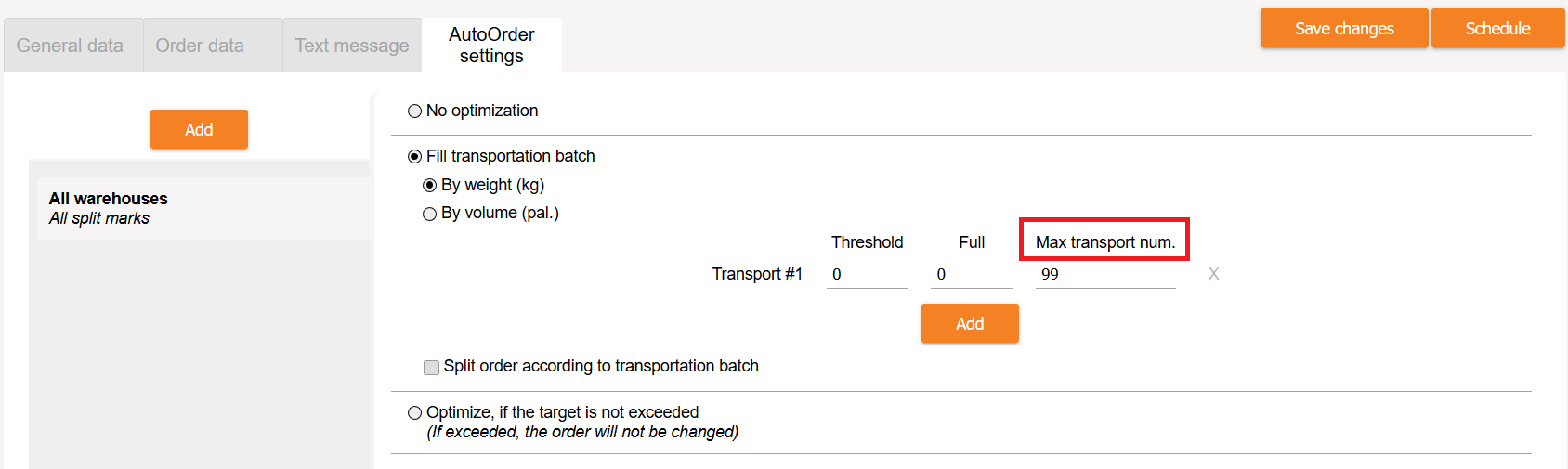
Maximum number of transports in optimization.
In the supplier‘s card near AutoOrder settings by describing transport (AutoOrder settings -> Fill transportation batch) you can show how many transports can be (the maximum number of transports).
The system will choose one kind of transport, while optimizing an order, and will fill in only that kind of transport till the specified maximum number.
New menu icon / button “?”
StockM you can see the new menu icon / button ”?”
Clicking on it opens a list with links:
- User Manual;
- Stockm News;
Clicking on them takes you to the appropriate page.

StockM update 2019.11.28.
StockM update 2020.02.06
1. Clarification of Auto send settings in the supplier‘s card.
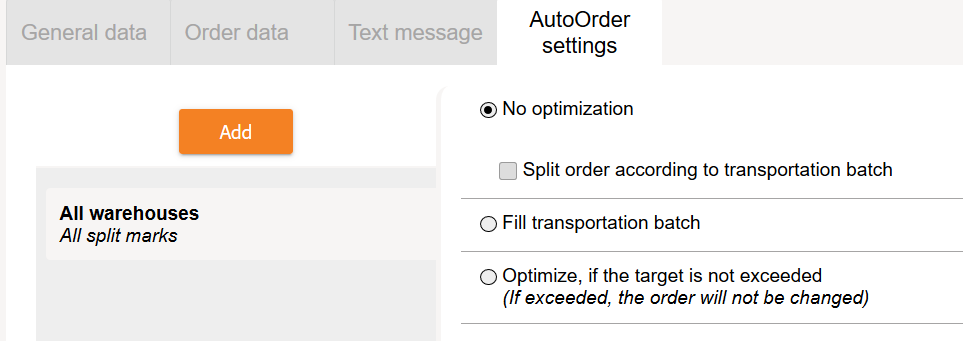
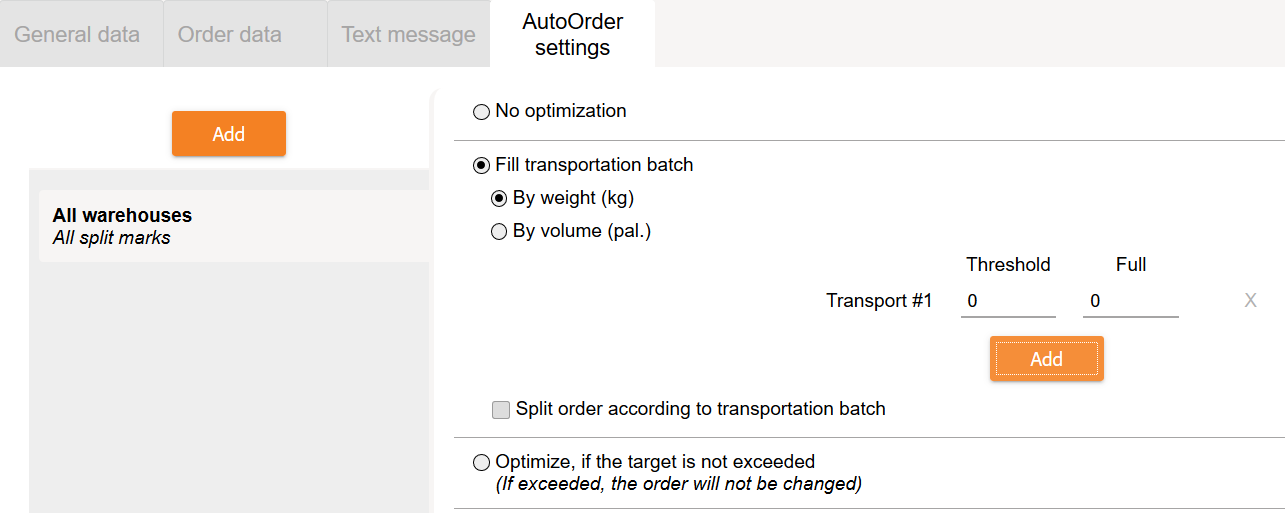
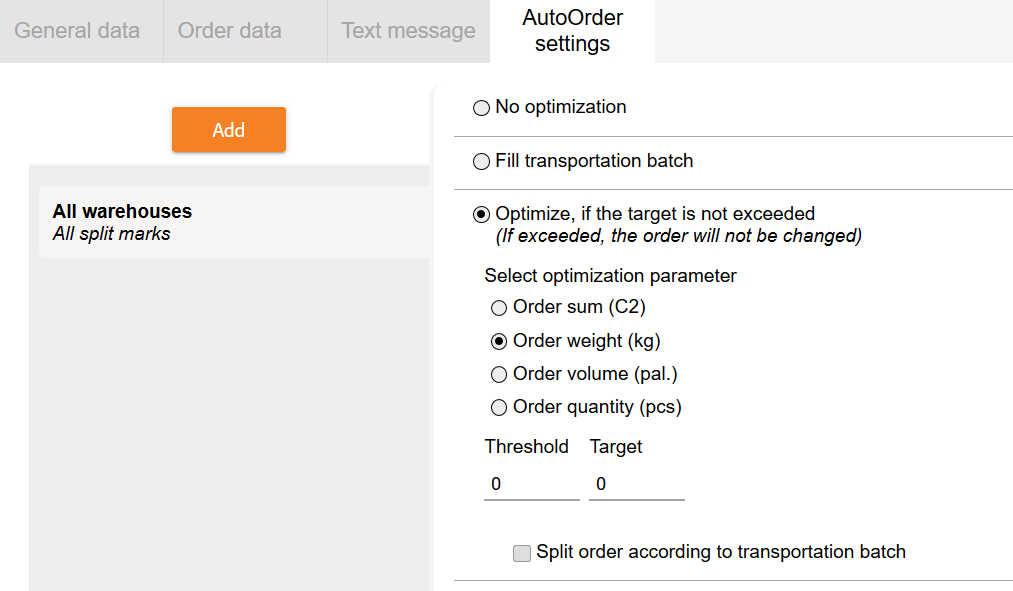
Selection of Auto send settings window in the supplier‘s card has changed:
- Optimization for auto send works only into the increasing side;
- If you want to decrease the order – to optimize into decreasing side, this you can do only by specifying the parameters manually.
- To decrease the number of rows to ... – also possible only by specifying the parameters manually.
Auto send settings window:
- Select „No optimization“.
Order formation several times a day.
The orders are formed by StockM system once a day. They are only formed if the data are renewed on that date before the order's formation.
Since this update, there is an option to form orders according to the time set in the 'Suppliers schedule '(data before order formation must be renewed). You can see the "Time" column in the 'Suppliers schedule ' to indicate the order formation time. The time is chosen from a list that is specified in SM Admin.
Important: usage of this function is agreed separately and is set for a whole company. If needed, contact the project manager.
- Select „Fill transportation batch”.
- Select “Optimize, if the target is not exceeded”.
Manual optimization window:
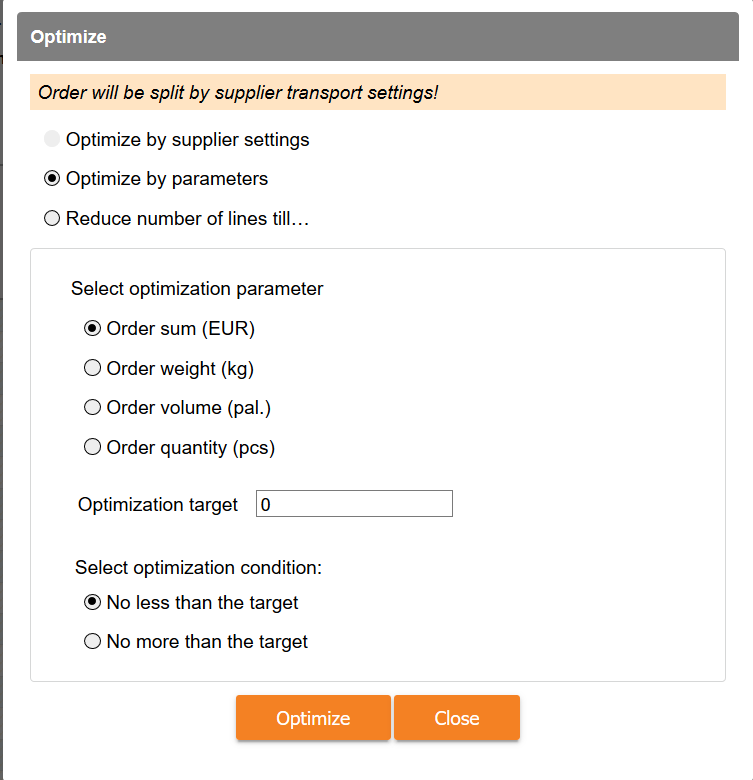
Show the optimization parameter, optimization purpose and optimization condition in this window, when you optimize the order manually.
1. Confirmation of supply graphs.
There is a possibility to import the supply graphs in StockM, from the accounting (file scheduler.csv).
All recieved supply graphs from the accounting are confirmed automatically by system, after update.
2. Template of promotion import.
The template of promotion import has changed after update.
Download the newest template from StockM, if you want to import data into promotion.
StockM update 2019.09.19.
StockM update 2020.01.30
Critical error: "Optimization: purchase price <= 0"
When order is optimized according the amount, purchase prices are checked and if the active goods/items don't have the purchase price, the order is not optimized.
The list will show items with Purchase Price <= 0 for suppliers, for which is set order optimization according the amount.
StockM update 2019.08.01.
1. Removing supplier activity.
Until now, it was not allowed to remove supplier activity if the supplier had active delivery schedules.
After update, when supplier activity is removed, all activities are automatically removed from supplier schedules as well. Supply schedules are not even visible.
If you will set activity on for the supplier, the shedules will be visible but not active - you will need to check and confirm it.
2. New critical notification: „Active items don‘t have active supplier“.
There is created warning of critical error: “Active items don’t have active supplier”. All active items will get into this list (not NA state and not NM state), for which inactive supplier is assigned. Items, which have OUT mover feature, will not be involved into the list.
For such items you will have to assign an active supplier.

3. The reason for changing the buffer, when the user disagrees with the system's suggested buffer.
Earlier, when the user disagreed with the system's suggested buffer, he left the former buffer - the system asked to specify the reason.
After update, the reason will be assigned automatically, when the user will disagree with the system's offer to change the buffer and will leave former buffer.
If another buffer will be specified (not that one, which was recommended by system), you will have to specify the reason.
1. Conversion of supplier units of measure.
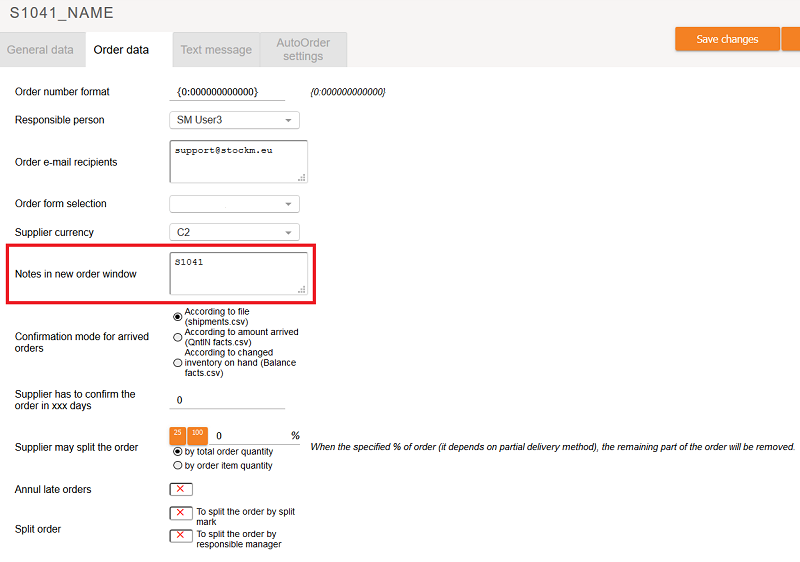
4. New column in the new orders window: “Notes in new order window”.
When a unit of measure of the supplier differs from the customer's unit of measure, it is possible to save the conversion of units of measure together with the rest parameters of the item in the supplier system. According to it the quantity in the supplier units of measure will be calculated. To do this, you must specify the conversion coefficient and its type: multiplier  or divider
  , that is of how many supplier units consists 1 unit of the customer, or how many customer units are included in 1 unit of measure of the supplier (so far there was a possibility to specify a multiplier only).
In the window “New orders” you can see new column “Notes in new order window”, where you can see information from the field “Notes in new order window” in the supplier card.
Examples:
Quantity in StockM is controlled by bottles, but it is necessary to place an order to the supplier by litres. One bottle contains 1.5 L, in which case the coefficient = 1.5 should be specified and the conversion type is a multiplier.
If StockM program offers to order 10 pieces, then according to the units of measure of supplier 10pcs. * 1.5 L = 15l.
Quantity in StockM is controlled by units, but it is necessary to place an order to the supplier by boxes. One box contains 10pcs., in which case coefficient = 10 should be specified and the conversion type is a divider.
If StockM program offers to order 60 pieces, then according to the units of measure of supplier 60pcs. / 10pcs. = 6 boxes


In the window of new order, you can select a column to see the supplier quantity going to be ordered. This value goes to the order form by default.